
How to Start Freelancing in Malta and Grow Your Client Base
Going freelance in Malta is mostly about three things: a service people understand, the right registrations, and a steady way to find clients. This guide walks through each one, then shows how to grow once the first jobs come in.
Updated 2 November 2026 · 5 min read

Choose one service you can sell
Freelancing works best when a stranger understands what you do from one line. "I design menus and signs for restaurants" is far easier to buy than "I do creative work". Begin with the skill people already ask you for, then check that someone on the island actually pays for it.
- Who would pay for this, and how often would they need it?
- Can you show three pieces of finished work today?
- Could you do it in evenings and weekends at first?
- Would you still enjoy it with a deadline on a bad week?
Keeping a salary while you build a client list takes the pressure off pricing. It also shows you whether you like the work once real deadlines and real clients are attached to it.
Register before you send the first invoice
Unless you set up a company, freelancing in Malta means working as self-employed, often called a sole trader. Sort the paperwork out before you invoice anyone, because it is much harder to fix afterwards.
Jobsplus registers self-employment through an engagement form. You log in to your Jobsplus account, open the Self Employment tab on the dashboard, fill in the details and submit. Jobsplus validates the form and adds it to your employment history. The same page notes that you will also need a VAT number.
SourceThe Business Startup (Sole Traders) eForm on servizz.gov.mt bundles the forms for the different agencies into one submission. It returns a VAT number if the activity is taxable, a Jobsplus number, and a PE number if you will employ staff. At the time of writing (November 2026) it is open to Maltese citizens with a valid identity card carrying any letter except A.
SourcePeople who earn income from a trade, business or profession and are not employed pay Class 2 social security contributions once that income goes over a yearly threshold. The rate is worked out from your net profit for the year before.
Source
VAT types, provisional tax and expenses have their own guide: read the freelancer's guide to tax, sales and expenses before your first busy month, and have an accountant confirm what applies to you.
Set prices you can explain
Clients compare quotes, so each price needs a reason behind it. Time a typical job honestly, including emails, revisions and travel, then choose how you charge. Software, equipment and VAT all come out of what you earn, so count them in.
| Pricing model | Fits work that is | Watch out for |
|---|---|---|
| Hourly rate | Open-ended, like support, edits or lessons | Clients asking for a running total every few days |
| Day rate | On site, or booked in blocks | Days that quietly stretch into evenings |
| Fixed project price | Clearly scoped, like a logo, a shoot or a website | Extra requests that creep in after you quote |
| Monthly retainer | Ongoing, like social media or bookkeeping | Hours that grow while the fee stays put |
Whatever model you pick, put the scope in writing: what is included, how many rounds of changes, when you get paid, and what happens if the client goes quiet halfway through. A short email the client answers with "agreed" beats a handshake.
Win your first clients
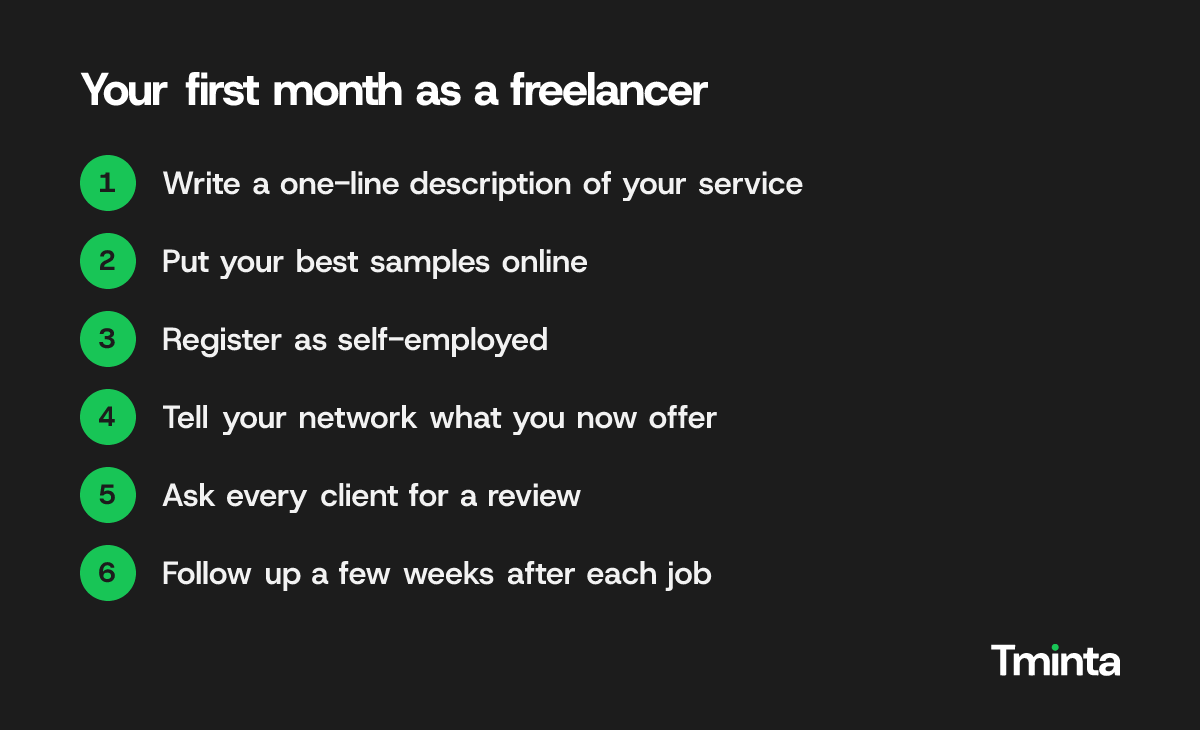
Early work nearly always comes from people who already know you. Tell former colleagues, relatives with a business and the shops you use what you now offer. After each job, ask for a short review and for the name of one person who might need you next.
Online, go where your buyers already look. Companies search Google and LinkedIn. Households ask for recommendations in local Facebook groups. Answer questions helpfully in those places for a while before you pitch, so people know your name when they need the service.
Grow without burning out
Once work arrives by itself now and then, the job changes. You need repeat clients, better-paid projects and time left over for admin. These habits help.
- Partner with a freelancer whose service sits next to yours, like a copywriter and a designer, and pass work both ways.
- Recommend someone else when a lead is a poor fit. They tend to return the favour.
- Turn your most common job into a named package with a fixed scope, so buyers can say yes quickly.
- Raise prices for new clients first, and give existing clients notice before theirs change.
- Note where every client came from, so you know which effort pays off and which to drop.
- Block a set time each week for invoices and receipts, so nothing piles up at tax time.
A job far outside your skill, or far below your rate, eats the hours you need for the clients you want. Refer it on and keep the goodwill.
Get found by people in Malta
Make it easy for a client to reach you once they have seen your work: a Google Business Profile, a page with samples, and a phone number that works on WhatsApp cover most of it. Tminta is free to join as well, so you can list your business and add photos of real jobs.
Starting in a specific field? Read getting started as a web designer or how to start as a graphic designer.
Questions people ask
Do I need to register to freelance in Malta?
Yes. Freelance work is self-employment, and Jobsplus expects you to register it with a self-employment engagement form, either through your Jobsplus account or, for Maltese citizens, the Business Startup eForm on servizz.gov.mt. You will usually need a VAT number too. Register before you start invoicing, and ask an accountant which VAT registration suits your work.
Can I freelance while I have a full-time job in Malta?
Many people start that way. Read your employment contract first for any clause on outside work or competing with your employer. Register the part-time self-employment with Jobsplus. MTCA has a reduced tax rate for qualifying part-time self-employment, with conditions, which our tax guide for freelancers explains in more detail.
How much should I charge as a freelancer in Malta?
It depends on how long each job really takes, your experience, what clients compare you with, and your own costs such as software, travel and VAT. Time your work honestly, look at how others present their services, and always quote in writing with a clear scope. Review your prices at least once a year.
How do freelancers find clients in Malta?
Word of mouth still brings in a lot of first jobs, so tell people you know and ask happy clients for referrals. Add a Google Business Profile, show real samples online, and be helpful in the groups where your buyers ask for recommendations. A free listing on a local directory adds one more way to be found.