
Seasons in Malta: When Summer Ends, When Winter Starts and What Each Month Is Like
Malta has four seasons on paper, but summer feels long and winter feels short. Here is when each season starts and ends, what the Met Office says is normal, and how to get your home and your wardrobe ready.
Updated 3 November 2026 · 7 min read

How many seasons does Malta have?
Malta has four seasons. The Malta Meteorological Office, based at the airport in Luqa, reports the weather in meteorological seasons of three whole months each. Winter is December to February, spring is March to May, summer is June to August and autumn is September to November. So if you are asking what season it is in Malta right now, in early November, it is autumn. Winter starts on 1 December.
Ask people who live here and many will tell you there are really two: a long, hot, dry summer and a short, mild, wet winter, with spring and autumn as quick changeovers. Both views are fair. The calendar is fixed, but the feel of each season shifts from year to year.
Visit Malta describes Malta's climate as typical of the Mediterranean and strongly influenced by the sea, with a daily average of around 12 hours of sunshine in summer going down to 5 to 6 hours in mid-winter. It says summers are hot, dry and very sunny, winters are mild, and annual rainfall is low, averaging 568mm a year (at the time of writing, November 2026).
Source| Season | Months | What it feels like | What to watch for |
|---|---|---|---|
| Winter | December, January, February | Mild days, cool nights, the wettest and windiest part of the year | Storms, strong north-westerly winds, damp indoors |
| Spring | March, April, May | Warming up fast, mostly dry, the odd hot spell | Scirocco days, haze and dust, an early heatwave |
| Summer | June, July, August | Hot, dry and very sunny, with sea breezes | Heatwaves, sunburn, humid nights |
| Autumn | September, October, November | Still warm early on, wetter towards the end | Sudden thunderstorms and the first heavy rain |
Winter in Malta: from 1 December to the end of February
When does winter start in Malta? On the Met Office calendar, on 1 December. It ends on the last day of February. In practice the first cool, wet spells often arrive in November, and a warm, sunny day in January is nothing unusual.
The Malta Meteorological Office counts the meteorological winter as December to February. In its round-up of winter 2023 to 2024 it gave the climatic norm for February's average temperature as 12.6°C (at the time of writing, November 2026).
SourceVisit Malta says winters are mild, with short cold spells brought by north and north-easterly winds from central Europe. Those winds are what make winter feel colder than the numbers suggest, especially on the seafront. Rain tends to come in bursts with thunder, and hail showers are not rare.
The bigger surprise for newcomers is indoors. Many homes have stone walls, tiled floors and no central heating, so rooms can feel cold and damp. A dehumidifier, a heater and good airing make more difference than an extra jumper.
The Malta Met Office says the sea around the islands makes conditions very rarely cold or dry enough for proper snowfall, with soft hail or graupel being a more likely occurrence.
Source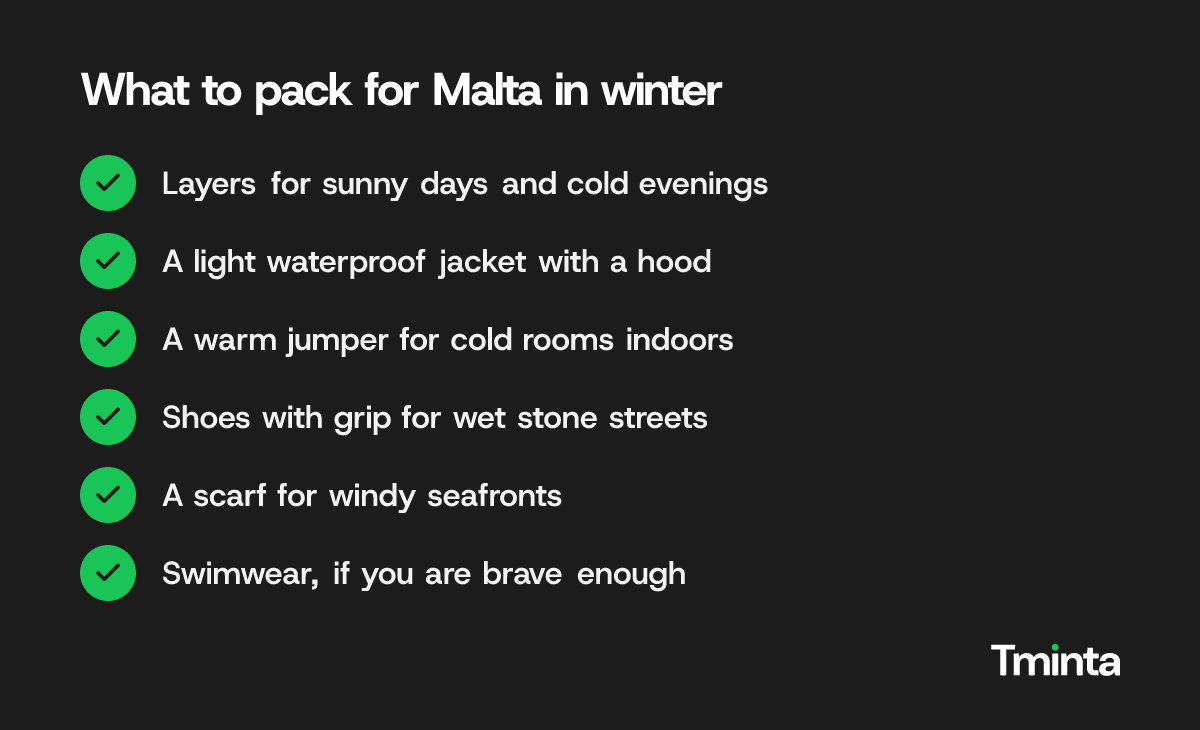
Spring in Malta: from 1 March to the end of May
Spring starts on 1 March and ends on 31 May. It is short and it moves quickly. March can still feel wintry, with wind and showers. By May the beaches are filling up and the first hot days arrive.
The Malta Met Office counts the meteorological spring as March to May. In its spring 2024 round-up it gave the spring norm for rainfall as 68.6 mm across the three months (at the time of writing, November 2026).
SourceVisit Malta notes that spring and autumn are cooler, except when the Scirocco wind from Africa brings unseasonably high temperatures and humidity. On those days the air turns heavy and hazy, and dust can settle on cars, balconies and washing. Spring is a good time for outdoor plans, walks and painting the outside of the house before the heat.
Summer in Malta: from 1 June to the end of August
Summer starts on 1 June. When does summer end in Malta? On the calendar, on 31 August. In real life it does not stop then. September is often still hot and sticky, and the sea stays warm for weeks after.
In its June 2025 report, the Malta Met Office gave the climatic norm for June as a mean air temperature of 24.2°C, 334.1 hours of bright sunshine and 5.8mm of rain (at the time of writing, November 2026).
SourceJuly and August are the hottest months. Visit Malta says day-time temperatures are often eased by cooling sea breezes, but nights can stay warm and humid, and heatwaves do happen. Plan errands, deliveries and building work for the early morning, and keep the middle of the day for shade.
The Malta Met Office says its records show the sea is coldest in February, with an average temperature of 15.1°C over the years, and warmest in August, at 25.7°C (at the time of writing, November 2026).
SourceVisit Malta adds that bathing in the sea is quite possible well into the winter months, and the peak beach season can last until mid to late October. For a party or wedding in the warm months, our guide to planning an event in Malta covers shade, water and a plan for rain.
Before a boat trip, a ferry to Gozo or an outdoor event, look at the forecast and any weather warnings on the Malta Met Office website. Strong winds can cause rough seas and can stop the ferry between the islands.
Autumn in Malta: from 1 September to the end of November
When does autumn start in Malta? On 1 September, and it runs until 30 November. It is two seasons in one. September and October often feel like summer, then the weather turns, the first big storms roll in and evenings get cooler.
The Malta Met Office says the meteorological autumn stretches from September until November. In its autumn 2022 round-up it gave climate norms of 77.6 mm of rain for October and 89.1 mm for November, and a mean temperature of 21.7°C for October and 17.9°C for November (at the time of writing, November 2026).
SourceThe Met Office measures rainfall over a precipitation year, which starts in September and ends in August.
SourceThat rain year tells you a lot. After a dry summer, the first heavy showers find every blocked drain, cracked roof and leaking window. Autumn is the time to get those fixed, before the wettest weeks of winter.
Getting your home ready for each season
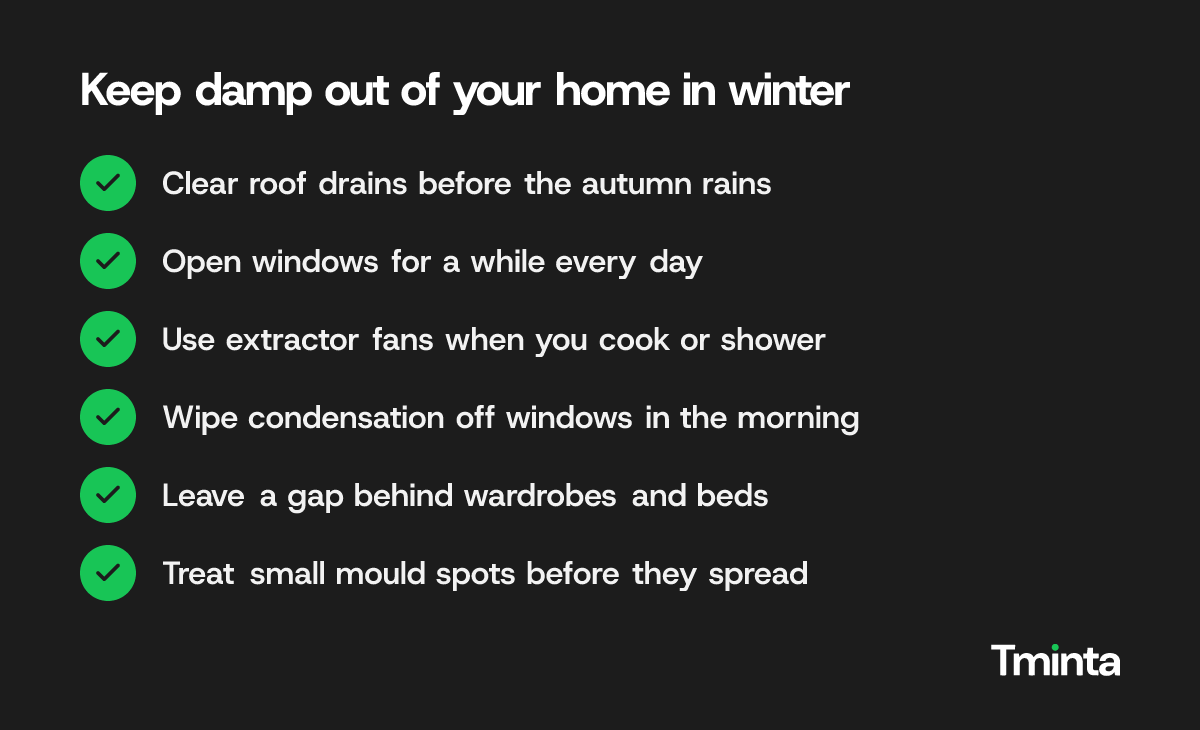
Malta's climate is kind to people and hard on buildings. Summer sun and salt air wear down paint and sealants. Winter rain and humid air bring damp patches, peeling plaster and black mould in corners and behind wardrobes. A few habits keep most of it away.
- Mould that keeps coming back: a deep clean helps, so compare cleaners who say they treat mould, and ask what products they use.
- Damp walls and blown plaster: ask gypsum and plastering contractors to find the cause first. Replastering over a leak only hides it.
- Roof, drains and small leaks: a handyman can clear drains and reseal around windows. Larger roof jobs need a specialist.
Everyone remembers their roof after the first storm. Ask for quotes in late summer or early autumn, while people have time to come and look.
Tminta lists local businesses so you can call or WhatsApp them direct. It does not check them for you, so look at recent work and ask for a written quote before you agree.
Questions people ask
Does it snow in Malta?
Hardly ever. The Malta Met Office says the warm sea around the islands means conditions are very rarely cold or dry enough for proper snowfall, and soft hail or graupel is more likely. Its monthly reports often mention hail during winter thunderstorms, but there is no snow season, so leave the snow gear at home.
When does winter start in Malta?
The Malta Met Office counts winter as December, January and February, so winter starts on 1 December and ends on the last day of February. The first cold, wet and windy days often come in November. January and February are usually the coolest months, but sunny, mild days happen all through winter.
When does summer end in Malta?
On the Met Office calendar, summer runs from June to August, so it ends on 31 August. The hot weather usually carries on into September, and Visit Malta says the peak beach season can last until mid to late October. Many people swim well into autumn while the sea is still warm.
When does autumn start in Malta?
Autumn starts on 1 September and ends on 30 November, which is how the Malta Met Office reports the season. September and early October can still feel like summer. The change usually comes with the first big thunderstorms and heavy rain, which often arrive in autumn after the long dry summer.
How many seasons are there in Malta?
Four: winter (December to February), spring (March to May), summer (June to August) and autumn (September to November). That is how the Malta Met Office reports the weather. Many people who live here feel there are really two, a long hot summer and a short mild winter, with quick changes in between.