
How to Become an Electrician in Malta
In Malta you cannot wire, alter or certify an installation without a REWS authorisation. This guide walks you through the two classes, the three ways to qualify, the application and what changes once you work for yourself.
Updated 2 November 2026 · 5 min read

The licence: REWS Authorisation A or B
People still call it the wireman's licence. The legal name is an authorisation, and it comes from the Regulator for Energy and Water Services (REWS). Everything else in your career as an electrician here builds on it.
Under the Electrical Installations Regulations (S.L. 545.24), installing, altering, extending or certifying an electrical installation needs an authorisation issued by the Regulator for Energy and Water Services (REWS).
Source| Question | Authorisation A | Authorisation B |
|---|---|---|
| Which installations? | Single phase | Single phase, plus three phase rated under 300 amps per phase |
| Large three phase (300 amps per phase and over) | Not covered | May install, alter and extend, but not certify on their own |
| Practical experience before you apply | One year in single phase work | Two years in three phase work |
| Who endorses your experience testimonials | A holder of at least Authorisation A | An Authorisation B holder or a warranted electrical engineer |
| Counts as the other class? | No | Yes, a B holder is treated as holding A |
Most new electricians start with A, because most flats and houses are single phase. B opens up workshops, shops, bigger villas and commercial jobs, so it is worth planning for once you have the three phase hours.
Three ways to qualify
To be eligible you must be at least 18 and fall into one of three groups: you passed the examination held for this purpose by the Registrar of Examinations and have the practical experience for your class; you are an electrical engineer with a valid warrant recognised in Malta and the same experience; or you hold equivalent certification with a recognition statement from the Malta Qualifications Recognition Information Centre.
SourceFor most people the first route is the real one: study, sit the wireman's examination, and build up supervised hours on site. If you trained abroad, the regulations also allow the Regulator to ask for an aptitude test or an adaptation period working under an authorised holder.
MCAST's Advanced Diploma in Electrical Systems (MQF Level 4, three years full-time, with an apprenticeship) includes the requirements set by REWS for the Electrical Wireman's Authorisation A and Authorisation B.
SourceMCAST's Diploma in Electrical Installations is an MQF Level 3 course, one year full-time. Applicants must show colour vision clearance from an assessment approved by REWS.
SourceYour application needs testimonials signed by the authorised electricians you worked under. Note the dates, the type of installation and who supervised you while you still remember. Chasing old bosses for signatures years later is painful.
Applying to REWS
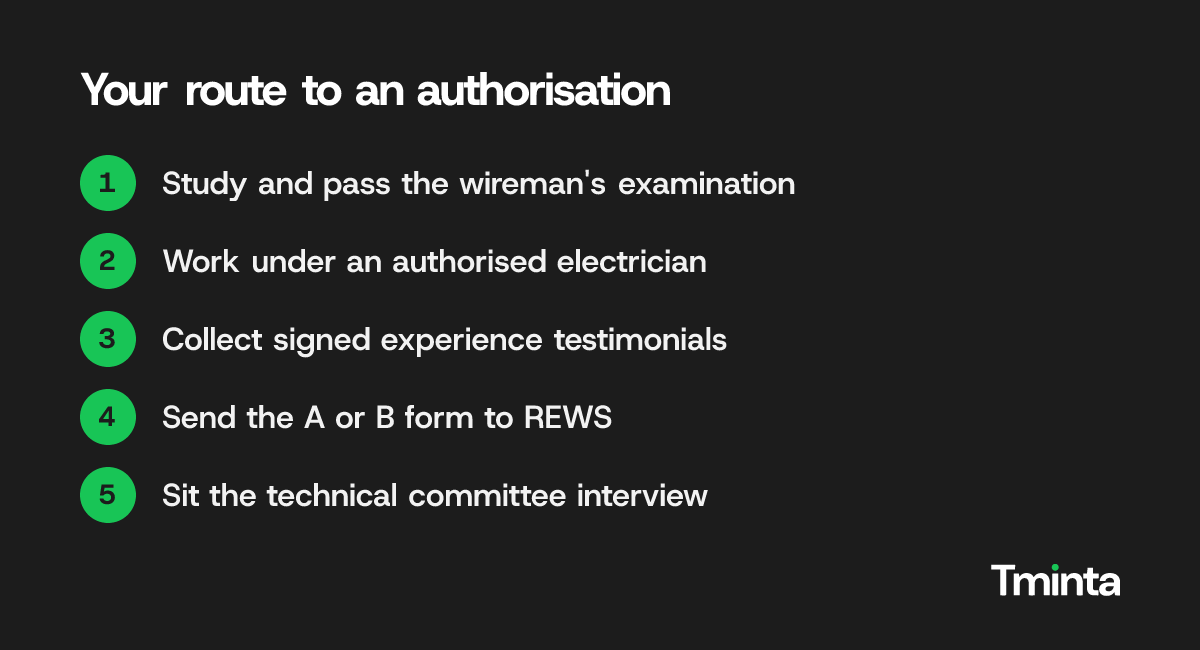
You apply to REWS in writing on its form A or form B, with a copy of your ID, a letter from the Registrar of Examinations showing your pass in the Wireman's examination, and testimonials of your practical experience. You then sit an interview before a technical committee. If you are not recommended, you can re-apply for another interview after six months.
Source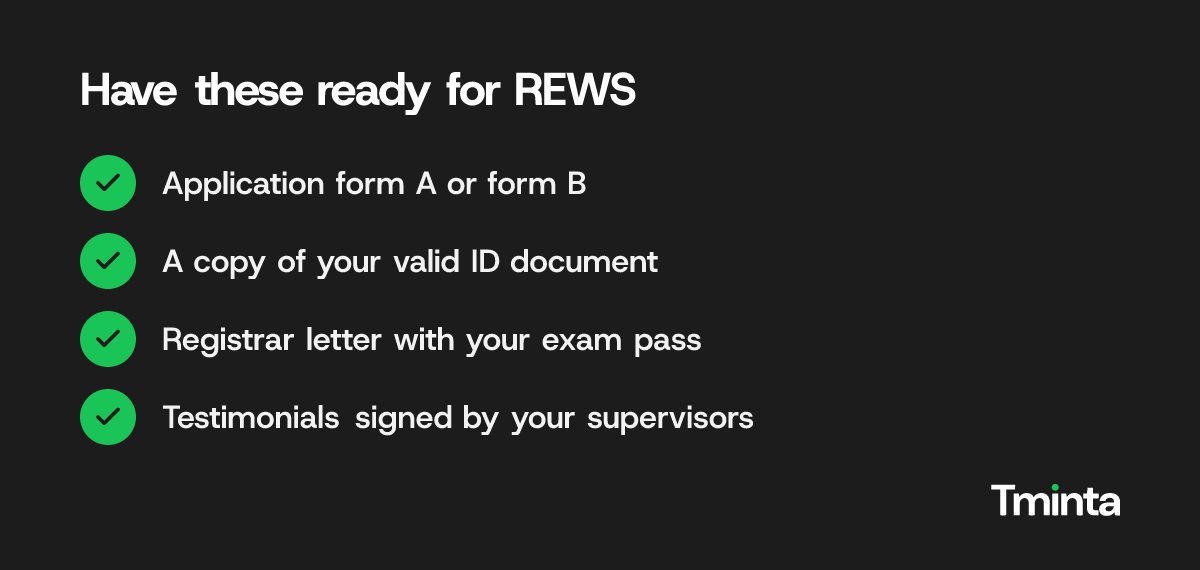
Once granted, an authorisation is renewed automatically as long as you meet its conditions. An authorisation fee is due every three years. If it stays unpaid after REWS writes to you by registered mail, the authorisation can be revoked.
SourceGoing out on your own
Plenty of electricians work for a contractor first and set up alone later, once they have regular customers and their own tools. When you take that step, the paperwork is short but the timing matters.
Jobsplus asks you to send the self-employed Declaration of Commencement on the same day you start. A self-employed person who sends it late is liable to a fine under the Employment and Training Services Act.
SourceYou register through the Self Employment tab on your Jobsplus dashboard. Jobsplus also tells you to get a VAT number alongside the engagement form.
SourceAsk a tax accountant which VAT registration fits the work you expect, and how to set money aside for tax. Then sort out a van or car that carries your kit, a test meter you trust, and a simple way to send written quotes and invoices.
Getting your first customers
Customers in Malta are told to ask for the authorisation number before anything else, as our guide to hiring an electrician explains. So put your class and number where people can see them, say which towns you cover, and be clear about evening or weekend call-outs.
Photos of tidy consumer units and finished rewires sell better than any slogan. Ask happy customers to recommend you, and reply fast: an electrician who answers the same day often wins the job. Listing on Tminta is free, so list your business and people searching near you can call or WhatsApp you direct.
Questions people ask
Do I need a licence to work as an electrician in Malta?
Yes, for installation work. The Electrical Installations Regulations require a REWS authorisation to install, alter, extend or certify an electrical installation. Authorisation A covers single phase and Authorisation B adds three phase. The rules apply to wiring, alterations and extensions in homes, shops, factories and most other buildings, so even adding one socket counts.
How long does it take to become an electrician in Malta?
It depends on your route. On top of passing the wireman's examination, the regulations ask for one year of practical single phase experience for Authorisation A and two years of three phase experience for Authorisation B. A full-time MCAST course adds its own study time before or alongside that, so plan in years rather than months.
Can I work as an electrician in Malta with a qualification from abroad?
Possibly. The regulations accept equivalent certification backed by a recognition statement from the Malta Qualifications Recognition Information Centre. Applicants from other EU states need an evaluation report from the Regulator, which can ask for an aptitude test in English or an adaptation period under an authorised holder. Contact REWS before you move your work here.
How much do electricians earn in Malta?
We do not publish figures, because pay swings widely. Employed electricians earn according to their contract and grade. Self-employed electricians set their own rates, and what they take home depends on their class of authorisation, how busy they are, whether they take urgent call-outs, their costs for tools and transport, and the tax and contributions they pay.