
Bookkeepers in Malta
Bookkeepers who keep the day to day records straight: invoices, receipts, bank reconciliations and VAT records, so your accountant gets clean books at year end.
Tminta lists 11 bookkeepers in Malta. Compare them below, then contact them direct. There are no fees.
- 11
- bookkeepers listed
- Free
- to contact, no fees
Bookkeeping & More
Accounting services in Malta
Stands out for a phone number you can call, their own website, a detailed profile.

Bookkeeping and accountancy firm for start-ups and small businesses

Corporate services provider offering accountancy, tax and admin services

Warranted accountant offering monthly packages for bookkeeping and tax
Accounting practice led by a certified public accountant

Accounting firm handling bookkeeping, tax, payroll and administration
Accountancy firm offering bookkeeping, tax, payroll and audit services
Freelance accountant handling bookkeeping, tax, VAT and payroll

Certified public accountant for bookkeeping, tax, payroll and audit
Qualified accountant providing bookkeeping, accounting and compliance help

Accounting and bookkeeping provider also handling payroll, VAT and tax
What they offer
About bookkeepers in Malta
A bookkeeper records what your business earns and spends: sales invoices, supplier bills, receipts, bank and card transactions. They reconcile the bank, chase missing paperwork and keep the ledger ready for VAT returns and the year-end accounts. Your accountant builds on that work, and an auditor checks the final result. Bookkeeping is the routine part, done weekly or monthly.
You need one when the pile of receipts keeps growing, when you register for VAT, or when you only look at the numbers at deadline time. Shops, cafés, tradespeople and small companies can hand over the monthly routine and keep an accountant for the annual work.
Fees follow the volume: invoices and bank transactions each month, the number of bank accounts and cards, stock, foreign currency, and how tidy the paperwork is when it arrives. Records sent every week are quicker to process than a year's worth in a box. Ask which software they use, whether you can see the books online, and how to send documents.
What you can hire them for
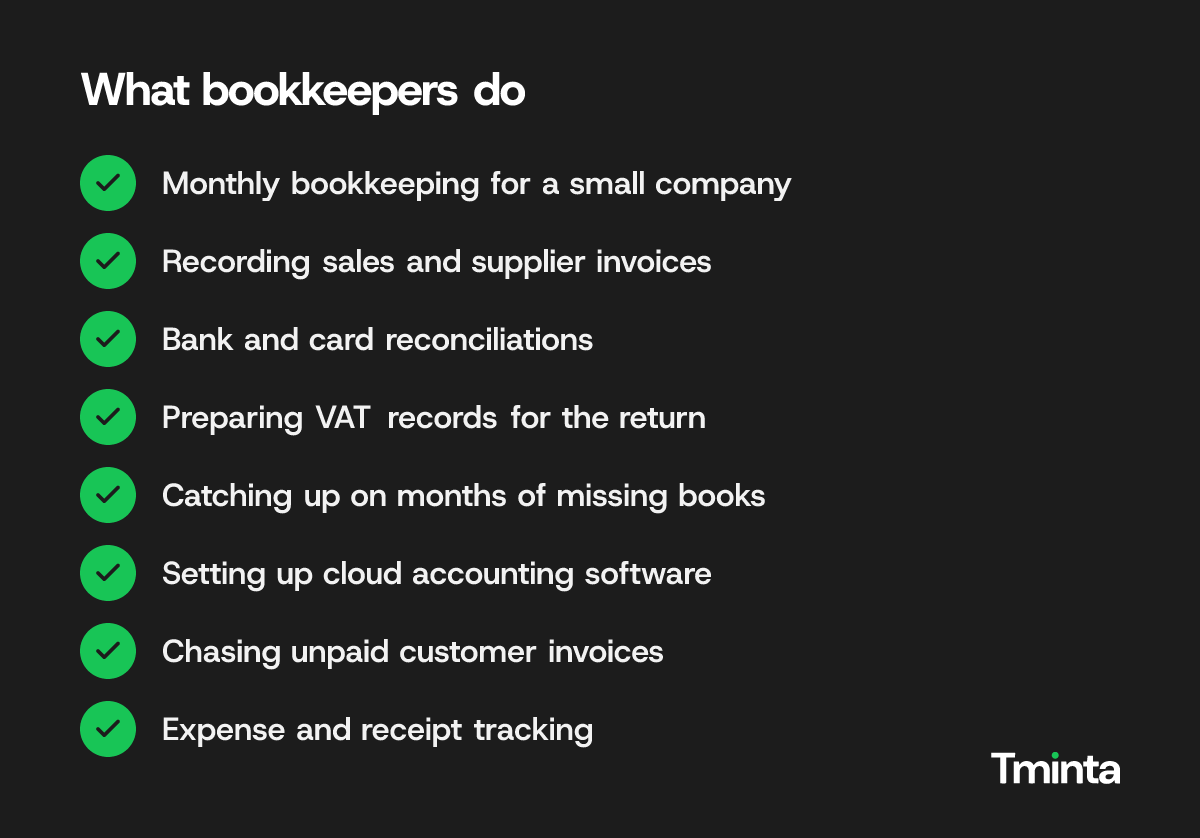
- Monthly bookkeeping for a small company
- Recording sales and supplier invoices
- Bank and card reconciliations
- Preparing VAT records for the return
- Catching up on months of missing books
- Setting up cloud accounting software
- Chasing unpaid customer invoices
- Expense and receipt tracking
- Year-end pack for the accountant or auditor
What to ask before you hire
- 1
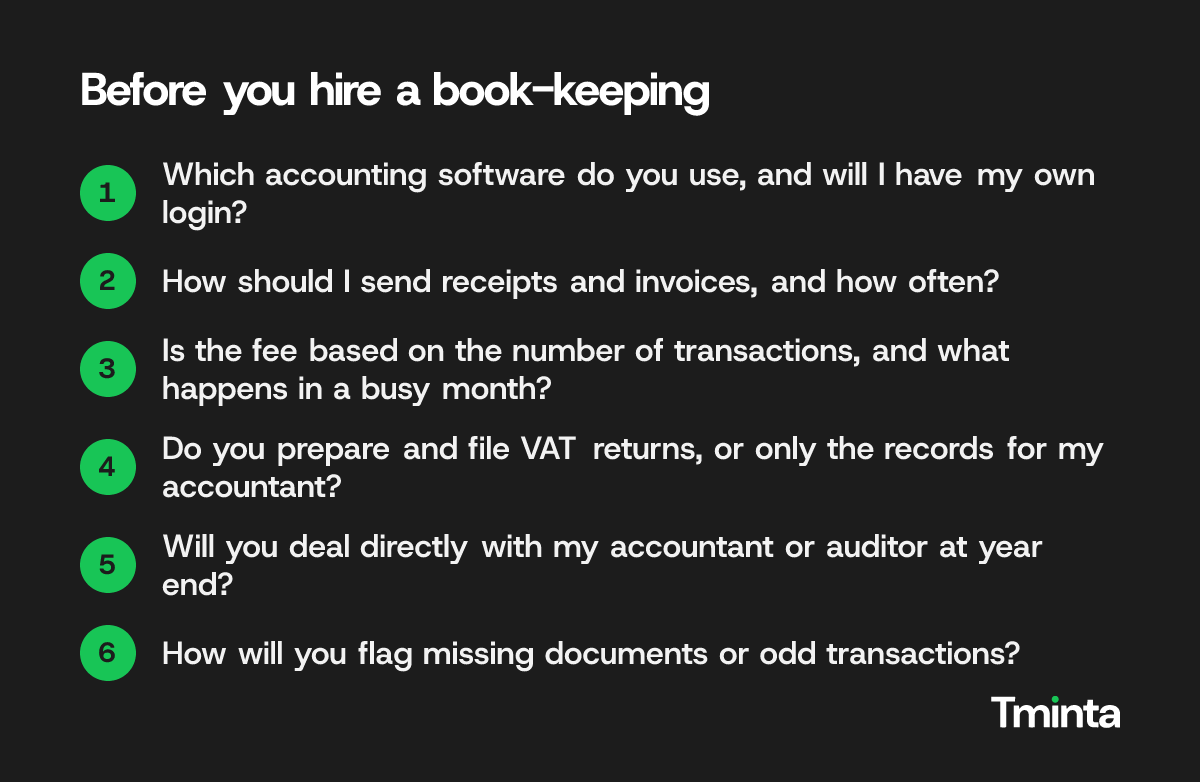
Which accounting software do you use, and will I have my own login?
- 2
How should I send receipts and invoices, and how often?
- 3
Is the fee based on the number of transactions, and what happens in a busy month?
- 4
Do you prepare and file VAT returns, or only the records for my accountant?
- 5
Will you deal directly with my accountant or auditor at year end?
- 6
How will you flag missing documents or odd transactions?
Good to know in Malta
- Under the Companies Act (Cap. 386), a company must keep proper accounting records of the money it receives and spends, its assets and liabilities and, if it deals in goods, its stock and stocktakings. Source
- A company's records must be enough to show and explain its transactions and its financial position at any time, and must be kept for ten years. Source
Questions
How much does a bookkeeper cost in Malta?
Bookkeeping is usually priced on volume: the number of invoices, receipts and bank transactions each month, plus extras like stock, payroll or several currencies. A tidy monthly upload takes less time than a year of loose paper. Send each bookkeeper a typical month's figures, ask for a monthly fee, and check whether VAT work and the year-end pack are included.
What is the difference between a bookkeeper and an accountant?
A bookkeeper does the daily recording: entering invoices, matching bank lines and keeping the ledger current. An accountant takes those records and turns them into tax returns, financial statements and advice. Many small businesses use a bookkeeper every month and an accountant once a year. Ask each one where their job ends, so nothing falls between them.
Do I need a bookkeeper if I am self-employed?
Not if your income is simple and you keep good records yourself. A bookkeeper starts to pay for themselves when you register for VAT, handle many small sales, buy stock or keep missing deadlines. Even a few hours a month can stop the year-end scramble. Ask whether they offer a light package for sole traders.
Can a bookkeeper in Malta catch up on old records?
Yes, catch-up work is common before a VAT deadline or when you change accountant. The bookkeeper will need bank statements, sales records and as many receipts and invoices as you can find, and will ask about anything they cannot match. Ask for a separate quote for the catch-up and a monthly fee for keeping things current afterwards.
How many bookkeepers are there in Malta?
Tminta lists 11 bookkeepers in Malta right now, and new ones join every month. Each page shows how to contact them.
How do I contact a book-keeping in Malta?
Open a profile and call, message, email or visit their website. You contact them direct, and there are no fees.
Can I see their work before I get in touch?
Yes. Open a profile to see photos of their work, links to their pages and reviews from customers.
Does Tminta charge a fee?
No. Searching and contacting bookkeepers on Tminta is free. You deal with them direct.
I am a book-keeping. How do I get listed?
Add your business for free on the "List your business" page. If you are already listed, open your page and claim it to update your details.