
Getting Started as a Web Designer in Malta
You can build websites for Maltese businesses from a laptop anywhere on the island. Winning and keeping those clients takes more than good design, so this guide covers the skills, the set-up, the portfolio, the packages and the habits that help you grow.
Updated 2 November 2026 · 5 min read
What clients expect you to know
Clients rarely ask to see a certificate. They ask to see sites you built, and whether those sites load fast and work on a phone. A course can speed up your learning, but the portfolio is what gets you hired.
- Layout, typography and colour that make a page easy to scan.
- Responsive design, tested on real phones, not only in a browser window.
- HTML and CSS well enough to fix what a page builder gets wrong.
- At least one content management system the client can update alone.
- Basic search set-up: page titles, descriptions, headings and redirects.
- Accessibility basics: contrast, alt text and forms that work with a keyboard.
- Speed: compressed images, sensible fonts and cheap-to-run hosting.
Soft skills count just as much. Most website projects stall because content arrives late or nobody decided who approves the design, not because the code was hard. Lead the client through each stage and they will remember you for it.
Set up as self-employed
Most web designers start as sole traders. The registration steps with Jobsplus and servizz.gov.mt are in our guide to starting freelancing in Malta. Web design has a VAT quirk worth knowing early: much of what you buy comes from abroad.
MTCA says self-employed people who are not registered under Article 10 must register under Article 12 if they buy services from suppliers established outside Malta, where the service is taxed in Malta and the customer is liable to pay the VAT.
SourceArticle 10 registration covers anyone supplying taxable services in Malta, or providing services that take place in other EU member states. Article 10 registered persons can claim input VAT on purchases linked to their supplies.
SourceHosting, themes, plugins, design tools and stock images are often billed by companies outside Malta. Show the list to your accountant when you choose your VAT registration.

You can check whether a business's VAT number is registered for cross-border trade within the EU with the European Commission's free VIES tool.
SourceRun that check before you invoice a business client in another EU country, and keep a note of the result with the invoice.
Build a portfolio that sells
A grid of screenshots says little. A short case study for each project shows a buyer how you think, which is what they are paying for. Three strong case studies beat twenty thumbnails.
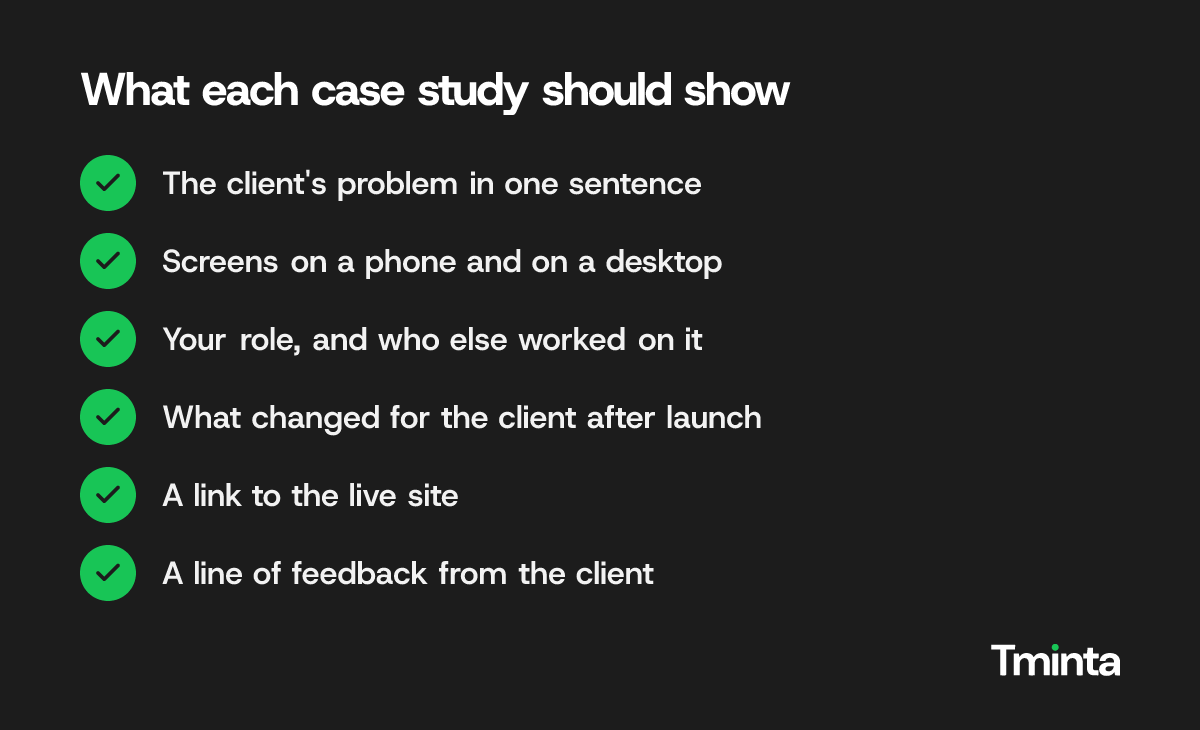
No clients yet? Build a site for a friend's small business or a local cause, with their permission, and treat it like a paid job: a brief, a deadline and a launch. A concept redesign of a real site is fine too, as long as you label it as a concept.
Package and price your work
Many small business owners find a website quote hard to judge. Named packages with a fixed scope make the decision easier, and they protect you from a project that never ends.
| Package | Usually includes | Agree in writing |
|---|---|---|
| One-page site | Design, build, contact form, basic search set-up | Who writes the text and supplies the photos |
| Small business site | Several pages, CMS training, analytics | How many rounds of design changes |
| Online shop | Product pages, payments, delivery options | Who uploads products and writes the returns policy |
| Redesign | New design on existing content | How old URLs will be redirected |
| Care plan | Updates, backups and small monthly edits | Response times and what counts as a small edit |
Register the domain and hosting in the client's name, or hand them over in writing at the end. Clients who feel locked in leave bad reviews, and clients who feel free tend to stay.
Six ways to grow as a web designer
- Show your work: keep case studies fresh and link to live sites.
- Be helpful: short posts or videos that answer the questions clients ask you bring in leads.
- Sell care plans: monthly maintenance turns one-off jobs into steady income.
- Partner up: work with content writers and photographers, and pass leads both ways.
- Ask for referrals: a month after launch, when the client is happy, ask who else might need a site.
- Pick a niche: becoming the designer for restaurants, clinics or property agents makes you easier to recommend.
Custom booking systems, integrations and web apps can go beyond design work. Partnering with web developers lets you say yes to bigger projects without risking the build.
Get found by local businesses
Put your own site in order first, because buyers will judge it. Add a Google Business Profile with real project photos, and ask every client for a review. A Tminta profile is free as well: list your business and link your best case studies.
Questions people ask
Do I need a qualification to be a web designer in Malta?
Clients rarely ask for one. They want to see live sites you built, how quickly they load and how they work on a phone. A course can help you learn faster and fill gaps, and it may help when applying for agency jobs. For freelance work, a portfolio with clear case studies matters most.
How much does a web designer earn in Malta?
It depends on whether you are employed or freelance, the type of projects (a one-page site or an online shop), how much of the work you do yourself, and how many clients pay you each month for maintenance. Recurring care plans make income steadier. Look at current job adverts and talk to designers already working locally.
Should I set up a company or work as self-employed?
Many web designers begin as sole traders because there is less to set up. A limited company changes your liability, how you are taxed and the paperwork you file each year. The right choice depends on your income, your clients and whether you plan to hire, so talk it through with an accountant.
How do I find web design clients in Malta?
Start with people who already know you and businesses whose sites clearly need help. Partner with writers, photographers and marketers who meet the same clients. Keep your own site and Google profile up to date, show case studies rather than screenshots, and ask happy clients for referrals.