
How to Get Started as a Graphic Designer in Malta
Graphic design in Malta runs from restaurant menus to brand identities for tech companies. This guide shows which skills to build, how to get your first paid work, and what changes once you start freelancing.
Updated 2 November 2026 · 4 min read

What graphic design work looks like here
Graphic design is a wide field, and most designers end up known for one or two kinds of work. Knowing the options early helps you pick what to practise and which clients to approach.
| Specialism | What you make | Who tends to hire |
|---|---|---|
| Brand identity | Logos, colour palettes, type choices, brand guidelines | New businesses and companies refreshing their look |
| Print and packaging | Menus, flyers, labels, boxes, brochures | Restaurants, shops, food and drink producers |
| Social media and ads | Post templates, ad sets, short animations | Marketing agencies and small businesses |
| Digital and UI | App screens, website layouts, email templates | Tech and online gaming companies |
| Signage and events | Shop fronts, banners, posters, stands | Retailers, venues, event organisers |
| Illustration | Drawings for books, campaigns and merchandise | Publishers, agencies, brands |
Many local designers combine two specialisms, such as branding and print, because a client who needs a logo usually needs a menu or a sign soon after.
The skills to build
- Typography: pairing fonts, spacing and hierarchy that guide the eye.
- Layout and grids, so pages feel ordered without looking rigid.
- Colour, including how a screen colour will look once printed.
- The standard tools: a vector app, an image editor, a layout app and a UI tool.
- Print files: bleed, crop marks, colour modes and the right resolution.
- Presenting ideas: explaining why a design works, not just showing it.
- Taking feedback without taking it personally.
Many first jobs in Malta are printed: menus, labels and shop signs. A file sent to the printer without bleed or in the wrong colour mode costs the client a reprint, and costs you the next job.
You can study full-time, take evening and part-time courses while working, or teach yourself with online tutorials and practice briefs. Employers and clients look mainly at your portfolio. A formal course can still help with structure, feedback and the contacts you meet along the way, and some junior roles list one as a requirement.
Getting your first paid work
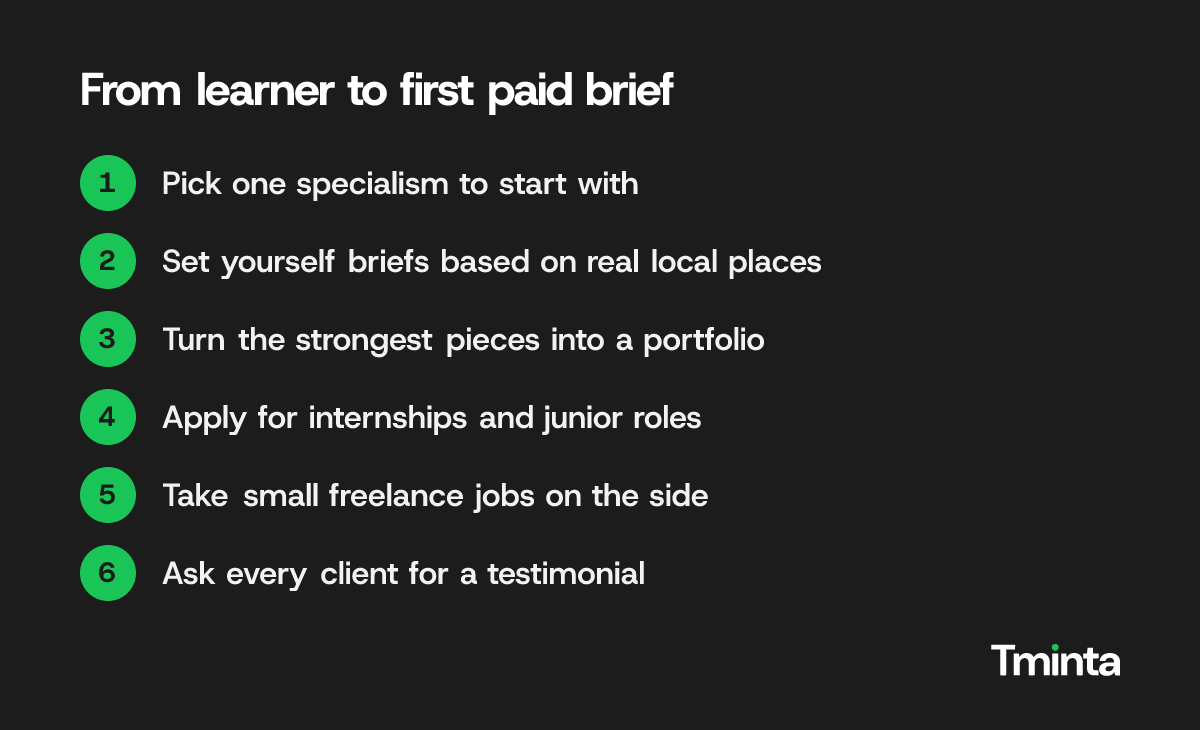
An internship or junior role in a studio or an in-house team teaches things a course cannot: client deadlines, print runs and working with copywriters and developers. In-house roles give you depth in one brand. Studios give you variety and a faster pace.
When you show your portfolio, explain each piece: the brief, the audience, two or three ideas you rejected and why the final one won. That conversation is often what decides an interview.
Going freelance: tax points for designers
Freelancing means registering as self-employed and choosing a VAT registration. The steps are in our guide to starting freelancing, and the detail on VAT and provisional tax is in the freelancer's tax guide. Two MTCA rules are worth knowing early as a designer.
If you keep a full-time job and design on the side, MTCA allows qualifying part-time self-employment profit to be taxed at a final 10%, up to a yearly cap, paid with form TA22. Conditions apply, including registering the part-time work with Jobsplus. This is the position at the time of writing (November 2026).
SourceMTCA's form TA26 lets a self-employed creative practitioner pay a final 7.5% tax on income from an artistic activity, from basis year 2026, as long as Arts Council Malta certifies that the income comes from an artistic activity. This is the position at the time of writing (November 2026).
SourceWhether commercial design work counts as an artistic activity is for Arts Council Malta to decide, not you. Ask them, and ask your accountant, before you plan your prices around either rate.
Files, rights and revisions
Most disputes between designers and clients are about what was included, not about the design. Settle these points in your quote.
- How many concepts you present, and how many rounds of changes follow.
- Whether the client gets editable source files or only finished PNG and PDF files.
- Who owns the final artwork, and when ownership passes (usually on full payment).
- Where the client may use the design: print, web, signage, merchandise.
- Who pays for fonts and stock images, and in whose name they are licensed.
- Whether you may show the work in your portfolio.
Get found by clients in Malta
Keep an online portfolio with your best work at the top, and post new projects where local businesses will see them. Many clients search for a narrower service, such as logo designers, so name your specialism clearly. You can list your business on Tminta for free.
Questions people ask
How do I become a graphic designer in Malta?
Learn the core skills (typography, layout, colour and the main design tools), then build a portfolio from practice briefs and small real jobs. Apply for internships or junior roles in studios and in-house teams, or freelance on the side. A course helps with structure and feedback, but the portfolio is what employers and clients look at first.
How much does a graphic designer earn in Malta?
Pay depends on whether you are employed or freelance, your specialism, the sector you work in and the size of the clients. Branding and UI work often pay differently from social media templates. Freelancers also cover their own software, equipment and tax. Compare current job adverts and talk to designers already working locally.
Do I need a degree to work as a graphic designer in Malta?
Not always. Many clients and studios hire on the strength of a portfolio. Some employers do list a qualification in their job adverts, and a course can help you learn faster, get feedback and meet people in the field. If you study part-time, keep taking small jobs so your portfolio grows at the same pace.
Can I work as a freelance graphic designer in Malta?
Yes. Register your self-employment with Jobsplus, sort out your VAT registration, and keep records for your tax return. If you also have a full-time job, MTCA has a reduced final rate for qualifying part-time self-employment. Put every job in a written quote with the scope, revisions and file handover agreed.